Not a gym membership. Not a supplement. Not a diet. A patch of soil, a few seeds, and the decision to grow something with your own hands. What happens next surprises almost everyone.
"Nothing can beat the taste of a homegrown tomato — nothing."
Every gardener says it. And it's not sentiment — it's chemistry. The tomato you buy at a grocery store was picked green, refrigerated for days, and ripened with ethylene gas in a warehouse somewhere. The one you grow was on the vine this morning. Those are not the same food. One was engineered to survive a supply chain. The other was grown to be eaten.
But the taste is just the beginning. When you start growing your own food, something shifts. You go outside more. You slow down. You notice things. The stress of the day doesn't follow you into the garden. You eat better — not because you're trying to, but because the food is right there and it's extraordinary. This page is about why that happens, and why it matters more than most people realize.
The Japanese have a word — shinrin-yoku — that translates roughly as "forest bathing." The simple act of being immersed in a living, green environment has measurable effects on the human body: lower blood pressure, lower cortisol, better mood, sharper focus. You don't need a forest. You need your backyard.
There's something else too — something harder to quantify but impossible to ignore once you've felt it. Watching a seed you planted in April become food on your table in July changes your relationship with eating, with your yard, with your daily routine. You feel less hurried. More grounded. More present. That's not an accident.
Mycobacterium vaccae, a bacteria found naturally in garden soil, triggers serotonin release when it enters the body through skin contact.10 Gardeners aren't just imagining that they feel better after digging around outside — there's a neurochemical reason for it.
UK researchers calculated that regular access to green space provides health benefits worth £300 per person per year.11 A raised bed in your backyard is that green space — available every single morning before you've even had coffee.
Michigan State University research found that gardeners consistently reported greater joy, purpose, and meaning in their daily lives.12 There's something deeply satisfying about being responsible for something alive — and being rewarded with food.
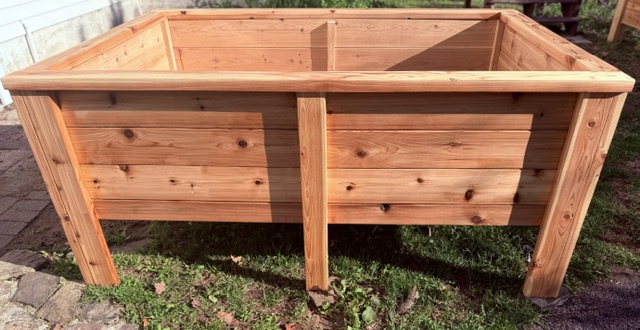
The hardest part of growing your own food is getting started. InstaGardenBeds removes every obstacle — we deliver the cedar bed, build it in your yard, and fill it with soil the same day. All that's left is planting.
"Growing your own vegetables and digging into the dirt can increase physical activity and give one a feeling of well-being and a sense of connection to the Earth."— Dr. Philip Smith, National Institutes of Health
1 Patient.info, "The health benefits of growing your own food" — survey data showing people who grow their own eat ~40% more vegetables. | 2 Journal of Health Psychology — 30 minutes of gardening measurably reduces cortisol levels. | 3 GardenTech, "Garden-to-Table Goodness and Nutrition" — vitamins and antioxidants up to 100%+ higher in locally grown vs. imported produce. | 4 Barton, J. & Pretty, J. (2010). "What is the best dose of nature and green exercise for improving mental health?" Environmental Science & Technology, 44, 3947–3955. University of Essex. | 5 Dr Earth, "Home Grown Nutrition"; Dr-Earth.com — commercial tomatoes picked unripe and treated with ethylene gas to simulate ripening. | 6 The Garden Continuum, "The 6 environmental and health benefits of growing your own food" — average 1,500-mile travel distance for US grocery produce. | 7 The Garden Continuum — commercial varieties bred for shipping durability, yield, and appearance rather than flavor or nutrition. | 8 University of California Agriculture and Natural Resources; GardenTech — nutrient deterioration begins at harvest and accelerates over time and distance. | 9 Soares, D. et al. (2021). "Glyphosate Use, Toxicity and Occurrence in Food." Foods, 10(11), 2785. PMID: 34829065. World Health Organization classification as probable carcinogen. | 10 Lowry, C.A. et al. (2007). "Identification of an immune-responsive mesolimbocortical serotonergic system." Neuroscience, 146(2), 756–772 — Mycobacterium vaccae and serotonin production from soil contact. | 11 Natural Environment Research Council (NERC) & Economic and Social Research Council (ESRC), via UKRI — green space health benefits valued at £300 per person per year. | 12 Alaimo, K. et al., Michigan State University / Wayne State University — gardening increases joy, purpose, and meaning. Published in collaboration with Denver Urban Gardens.

